
 14 hours ago
2
14 hours ago
2

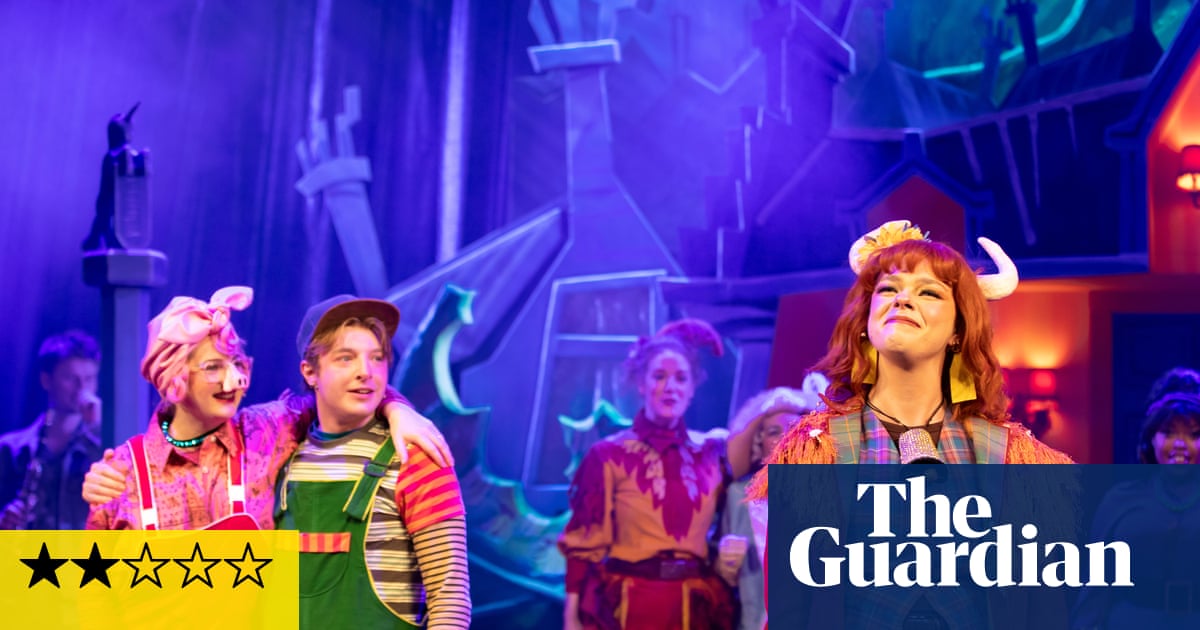
From Paddington and the BFG to The Gruffalo’s Child, My Neighbour Totoro to The Tiger Who Came to Tea, there is no shortage of stage adaptations of children’s classics filling theatres at the moment.
This week it was announced that Dog Man, the half-canine crime fighter from Dav Pilkey’s bestselling graphic novels, will make his London theatre debut at the Southbank Centre next summer.
Pilkey said the musical – adapted by Kevin Del Aguila and previously a sellout off Broadway – “surpassed my highest expectations” and left the audience, “especially me, in complete awe”. But how do writers set about reanimating cherished characters in an entirely new medium?
Del Aguila said: “When I was commissioned to adapt Dog Man my son was in fourth grade and extremely well versed in the books, so it was incredibly helpful to have a young expert at the breakfast table every morning.”
The Emmy-winning writer and actor, whose credits include stage versions of Diary of a Wimpy Kid, Click Clack Moo and Pilkey’s Cat Kid Comic Club, said for him “it all comes down to tone”.
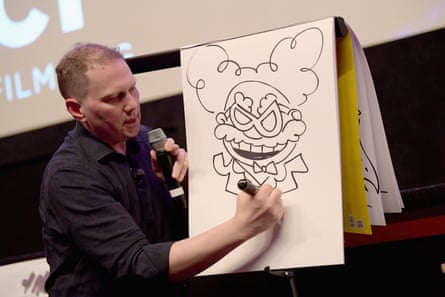
“If the show doesn’t feel like the books, the audience will revolt. They’re going to have quibbles no matter what – ‘that guy doesn’t look like the character in the book’ or ‘that character doesn’t speak the way I heard them in my head’ – but if you capture the sensibility of the books, I’ve found they can forgive all of that and go for the ride.”
Children, he said, felt a particular ownership of the Dog Man universe because the books felt gleefully unsupervised by adults. It was that sense of “fun anarchy” the team wanted to capture. Pikey himself, he added, was remarkably hands-off.
“He had only one stipulation when we started writing the show: Dog Man can’t talk. And if you’ve ever been told that the beloved title character of the musical you’re writing can only bark, you’ll understand the deep terror we felt. But we embraced the challenge and got inventive.”
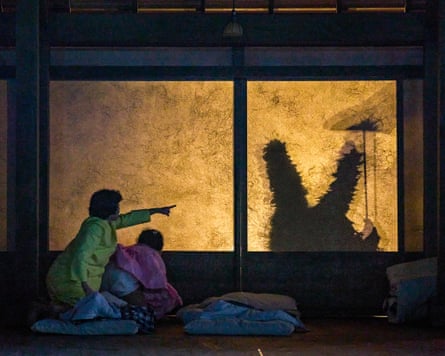
For Tom Morton-Smith, who adapted the 1988 Studio Ghibli fantasy My Neighbour Totoro for the RSC, first at the Barbican, where it won six Olivier awards, then the West End, immersion was the key.
He already knew the film, written and directed by Hayao Miyazaki, “but I just watched it over and over”. Working in translation, he said, offered a degree of freedom: he could deviate from the original text while still honouring its spirit.
“What I knew was most important was not slavishly sticking to the original but finding a way to conjure the same atmospheres and feelings that the film provokes,” he said.
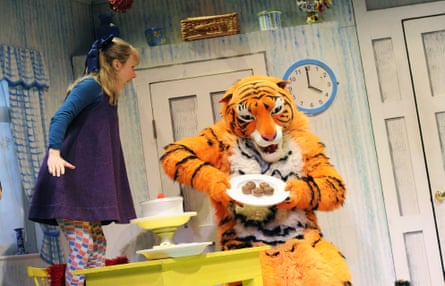
“I hope what we’ve achieved is a piece that feels in its bones like Totoro, not a hollow facsimile. It’s not about putting the film on stage; it’s about finding the essence of what Miyazaki and Ghibli created and crafting something new – with the same rigour and attention – but using the tools of live theatre.”
In Totoro, he added, the human characters were crucial. “There are beautiful, spiritual, sometimes surreal creatures in the story, but the audience meets them through the eyes of the family. So we had to land those dynamics. If the human characters felt too cartoonish, the forest spirits wouldn’t work at all.”
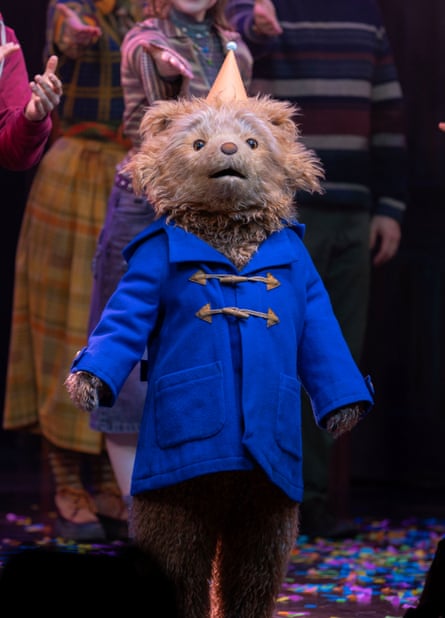
Morton-Smith spoke of the “huge responsibility” of taking on such a beloved story. “If I’ve done my job properly, people won’t be aware that I’ve done anything at all.”
For smaller companies, however, the challenges often begin long before the script: budgets, rights and the legal labyrinth of what is – and isn’t – in the public domain.
Siblings Jonathan and Lucy Kaufman, whose recent adaptations include The Tales of Beatrix Potter for Spontaneous Productions in south London, say they are usually restricted to works already out of copyright.
“Specific challenges we’ve faced include thinking Beatrix Potter’s stories were in the public domain and discovering they weren’t,” Lucy Kaufman said. “Luckily, we found out in time and obtained the rights. Another was writing a climactic chase scene involving 11 characters but only five actors – an exercise in logistics.”
Adaptations now account for more than half of UK theatre box office takings. A recent British Theatre Consortium report found that venues were increasingly programming familiar titles to rebuild audiences after the Covid crisis. In 2023, adaptations made up 40.8% of all performances, up from 35.6% in 2019.
“As a writer, I’d always prefer to create original plays,” Jonathan Kaufman said. “But because well-known stories tend to sell, my challenge is to transform familiar material into something new, engaging and – above all – relevant to modern audiences.”






 English (US) ·