
 2 hours ago
1
2 hours ago
1

Daniel Lawrence Taylor’s teen drama Boarders is a bit of a Trojan horse. From the aesthetic, you’d be forgiven for mistaking it for a shiny CBBC comedy. But the series, which follows a group of Black, inner-city teens through the looking-glass into an elite boarding school, is a sharp satire of these institutions. It doesn’t just take aim at the pomp and tradition of British boarding schools – although there’s plenty of familiar sending up of rugby lads. It also goes further to explore the range of incredibly complex dynamics that emerge every day for Black people in elite institutions.
Take its first two seasons, which took an unexpectedly cynical look at the business of diversity, equality and inclusion. After the teens enrol at the fictional St Gilbert’s, it quickly emerges that their scholarship programme is an attempt to rehabilitate the school’s image, which took a knock after a pupil poured champagne on a homeless man.
What ensues certainly isn’t a post-racial utopia, but it isn’t a car crash either. The students respond to their new surroundings in different ways. Leah (Jodie Campbell), a radical, compares the place to the movie Get Out, while Femi (Aruna Jalloh) parties with the posh boys in a bid to assimilate. The script’s choice to look at the experiences of five students, rather than just one, means it deftly avoids overgeneralisations about “the Black experience”.
The third season follows them into their final term exams, kicking off with all the students being placed on lockdown after a vandalism incident. Leah, who wrecked a portrait of a coloniser in series one, has an offer from Oxford and is overworking and risking her health to secure her two A*s and an A. Her plotline gives us details you might not expect: she has missed her period and doesn’t know whether it’s stress-related. Cheeky chappy Toby (Sekou Diaby) is off to Oxbridge too. Femi is trying to focus on his drama, but finds himself sidetracked by a complicated romance. Meanwhile, Omar (Myles Kamwendo) is considering following the well-trodden path of choosing the same university as his own love interest. Our attention is scattered relatively evenly across this cast of characters. But this doesn’t mean we lose interest – the drama keeps things fresh with twists slowly unfurling across the season.
There is something about Boarders that feels very real. Perhaps this is because, despite its meeting-of-worlds premise, the show pulls from life. Taylor had the idea for the show after reading an article about Black children who received scholarships to Rugby school – and also incorporated some of his experiences attending Royal Holloway as a Black south Londoner. It’s obvious from watching that the show has a primarily Black writers’ room, capturing mundane details such as asking your friends to call your mum “auntie”, and the frustration of having nowhere to get your hair done in predominantly white areas. Rather than feeling like a wink and a nod to Black audiences, these touches give the show depth. And the teenagers talk in the way young Black Londoners actually talk, which still feels striking for a BBC show in 2026.
This feeling of realism extends to season three’s treatment of year 13, which naturally lends itself to season finale plotlines. The characters’ familiar sixth-form dilemmas feel as high-stakes as they do when you’re living through them. There are the usual dramas of teenage relationships and sex (which is had silently in parents’ houses) – and the impact of these on education. But they are spliced with weighty questions about how race and class operate in elite institutions. The effect is that all the teenagers are granted three-dimensional inner lives – which continue to deepen and diverge from one another into the end of the run.
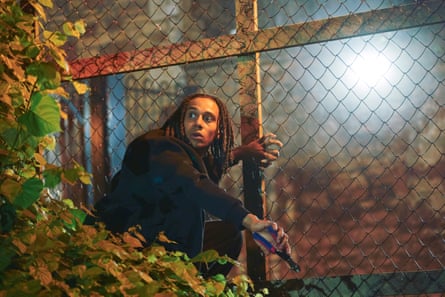
Bowing out on the third season feels right for Boarders. By the final episodes, there is a slight itch that we’ve seen these plotlines before; a mid-season class election story feels reminiscent of shows like Fresh Meat, and the whodunnit vandalism storyline is a slight retread of previous seasons.
Still, the charisma of the characters, and our investment in their fates, drive us through to the finish line. At the season’s close, we’re offered the same balance and nuance that Boarders has managed to strike throughout its impressive three-series run. There’s optimism, of course, but it doesn’t avoid the reality of struggle and failure in these environments, too. As Leah says: “It defo felt like we were on the frontline, battling Kevins and Karens.”








 English (US) ·